 stappn
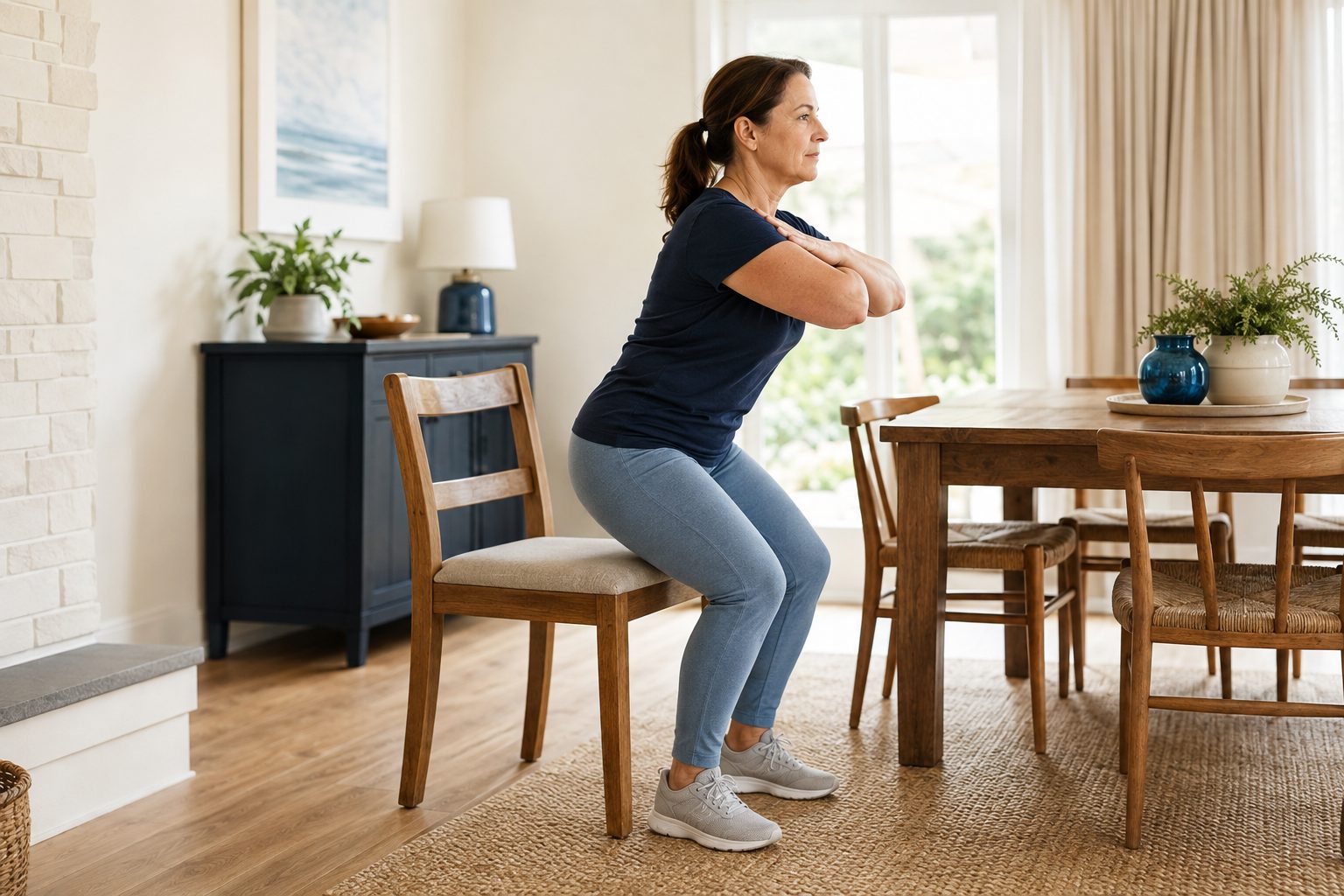
A beginner-friendly 4-week plan with short home strength sessions and walks, built to flex around your shot day and the days you feel low on energy.
Key takeaways
- General guidance for adults is 150 minutes of moderate activity a week plus muscle-strengthening on at least 2 days. You can build up to it gradually.
- On a GLP-1, strength work gets extra attention because weight loss can include lean mass.
- This plan starts with three 10–20 minute strength sessions a week and short walks, with no gym or equipment required.
- Put lighter days where your shot week usually feels hardest, and swap sessions instead of skipping the week.
- Check with your healthcare professional before starting if you have heart, joint or other health conditions.
If you use Ozempic, Wegovy, Mounjaro, Zepbound or another GLP-1 medication, you have probably heard that you should "add exercise," especially strength training. What is harder to find is a plan that starts small and still works on the days after your shot, when energy and appetite can dip.
This is that plan: four weeks, mostly at home, with a wall, a sturdy chair and optional water bottles. It is written for adults who are new to exercise or coming back after a long break.
Before you start: this is general education, not medical advice. If you have a heart condition, high blood pressure, joint problems, are pregnant, or have new or severe symptoms, talk to your healthcare professional before starting a new exercise plan.
How much exercise do you need on a GLP-1?
There is no separate exercise rule just for GLP-1 medications. The general adult guideline from the CDC is 150 minutes a week of moderate-intensity activity, like brisk walking, plus at least 2 days a week of muscle-strengthening activity (CDC). The same guidance says some physical activity is better than none, and that activity can be spread out in smaller chunks through the week.
Strength work gets extra attention for people on GLP-1 therapy. A 2025 joint advisory from four obesity and nutrition organizations lists adequate protein intake and strength training to preserve lean mass among its nutritional priorities (The Obesity Society). Strength training does not guarantee you will keep muscle, but it is one of the parts of the process you control. For the background, see our guide to strength training on a GLP-1.
Treat 150 minutes as a target to build toward, not where you have to start.
How the 4-week plan works
- 3 short strength sessions a week (10–20 minutes) on non-consecutive days, alternating Workout A and Workout B.
- Walks or easy cardio on most other days, starting at 10 minutes.
- 1–2 rest or gentle days, placed where your shot week usually feels hardest.
- Small weekly steps up: a few more reps or a few more minutes, not big jumps in intensity.
How hard should it feel? On walks, you should be able to talk but not sing. On strength moves, stop each set while you could still do 2–3 more good reps. Good form beats extra reps.
Plan your week around shot day
People respond differently. Some notice lower energy or appetite in the day or two after their injection; others feel no difference. Track your own pattern for a week or two (our article on moving on injection day explains how), then:
- Put strength days on the days you usually feel best.
- Use the day you tend to feel lowest for a short walk or the gentle routine.
- If a planned day goes badly, swap it with a lighter day instead of skipping the week.
Here is an example for someone who injects on Monday. Shift the pattern to your own shot day.
| Day | Example |
|---|---|
| Monday (shot day) | 10-minute easy walk or gentle routine |
| Tuesday | Rest or gentle routine |
| Wednesday | Workout A |
| Thursday | Walk |
| Friday | Workout B |
| Saturday | Longer walk |
| Sunday | Workout A, or rest if the week was hard |
The workouts
Rest 60–90 seconds between rounds. Use a sturdy chair placed against a wall so it cannot slide.
Workout A: legs and push
- Chair sit-to-stand: stand up from a chair and sit back down with control. Use your hands for support at first.
- Wall push-up: hands on the wall at shoulder height, lower your chest toward the wall, push back.
- Supported calf raises: hold the chair back, rise onto your toes, lower slowly.
- Supported glute kickback: hold the chair, move one straight leg back a few inches, return. Do both sides.
- Wall plank march: hands on the wall, body in a straight line, slowly lift one knee at a time.
Workout B: back, hips and balance
- Wall hip hinge: hands on the wall, push your hips back with a flat back, then stand tall.
- Standing row squeeze: arms forward, pull elbows back and squeeze your shoulder blades for 3 seconds.
- Supported side leg lift: hold the chair, lift one leg out to the side, lower slowly. Do both sides.
- Wall angels: back against the wall, slide your arms up and down like a slow snow angel.
- Supported march: hold the chair back and march slowly, lifting your knees to a comfortable height.
Gentle routine (5–10 minutes)
For low-energy days: slow breathing with arm floats, shoulder rolls, standing side reaches, gentle torso rotations, and a slow march in place. It keeps the habit going without asking much from your body.
Week by week
| Week | Strength (3 days) | Walking or easy cardio |
|---|---|---|
| Week 1 | 2 rounds of 6–8 reps (20 seconds for timed moves) | 10 minutes on 3–4 days |
| Week 2 | 2 rounds of 8–10 reps | 15 minutes on 4 days |
| Week 3 | 3 rounds of 8–10 reps; try the sit-to-stand without hands if it feels steady | 20 minutes on 4–5 days |
| Week 4 | 3 rounds of 10–12 reps; hold water bottles or wear a light backpack for rows and sit-to-stands if you want more challenge | 20–30 minutes on 5 days |
By week 4, walking 20–30 minutes on 5 days puts you at 100–150 minutes a week, close to the general guideline, on top of three strength sessions. If a week goes badly, repeat it. Moving forward slowly still counts.
What to do on low-energy days
- Do the gentle routine, or one round of your strength workout instead of three.
- A 5–10 minute walk still counts toward your week.
- Missing a day is not a debt. Pick up with the next planned session instead of doubling up.
- Stop if something feels wrong, and talk to your healthcare professional about new or severe symptoms.
If side effects such as nausea are shaping your days, our guide to exercising with GLP-1 side effects covers how to adjust.
Pair it with protein and steps
The same advisory that highlights strength training also lists adequate protein intake (The Obesity Society). Our free GLP-1 protein calculator gives you a starting range to discuss with your clinician or dietitian, and the daily step goal planner helps you set a walking target you can actually keep.
How Stappn helps
Stappn keeps your injection and side-effect records and turns a plan like this into short guided sessions, built around your shot day, your energy and the time you have. Its guided sessions use the same kind of supported, low-equipment moves you see here. On a low-energy day you can tell the coach and get a lighter session instead of skipping. Stappn does not diagnose, change medication or guarantee results. See how it works.
Frequently asked questions
- Can I work out on the day of my GLP-1 injection?
- Many people can, but it depends on how you feel. If you tend to feel tired after your shot, plan a walk or the gentle routine that day and save strength work for the days you feel better. Questions about your medication belong with your prescriber.
- How many days a week should I strength train on a GLP-1?
- General guidance for adults is at least 2 days a week of muscle-strengthening activity. This plan uses 3 short sessions so you still get 2 in on a tough week.
- Do I need a gym or weights for this plan?
- No. The plan uses a wall and a sturdy chair. Water bottles or a light backpack are optional for week 4.
- Is walking enough on a GLP-1?
- Walking is a great base and counts toward the 150-minute aerobic guideline. Adults are also advised to do muscle-strengthening activity on at least 2 days a week, which is why this plan includes both.
- Who should check with a doctor before starting?
- Anyone with a heart condition, high blood pressure, joint problems, pregnancy, or new or severe symptoms should talk to a healthcare professional before starting a new exercise plan.
References
This article is for general educational purposes and is not a substitute for medical advice. Medication, dose, side-effect and treatment decisions should be discussed with a qualified healthcare professional.