 stappn
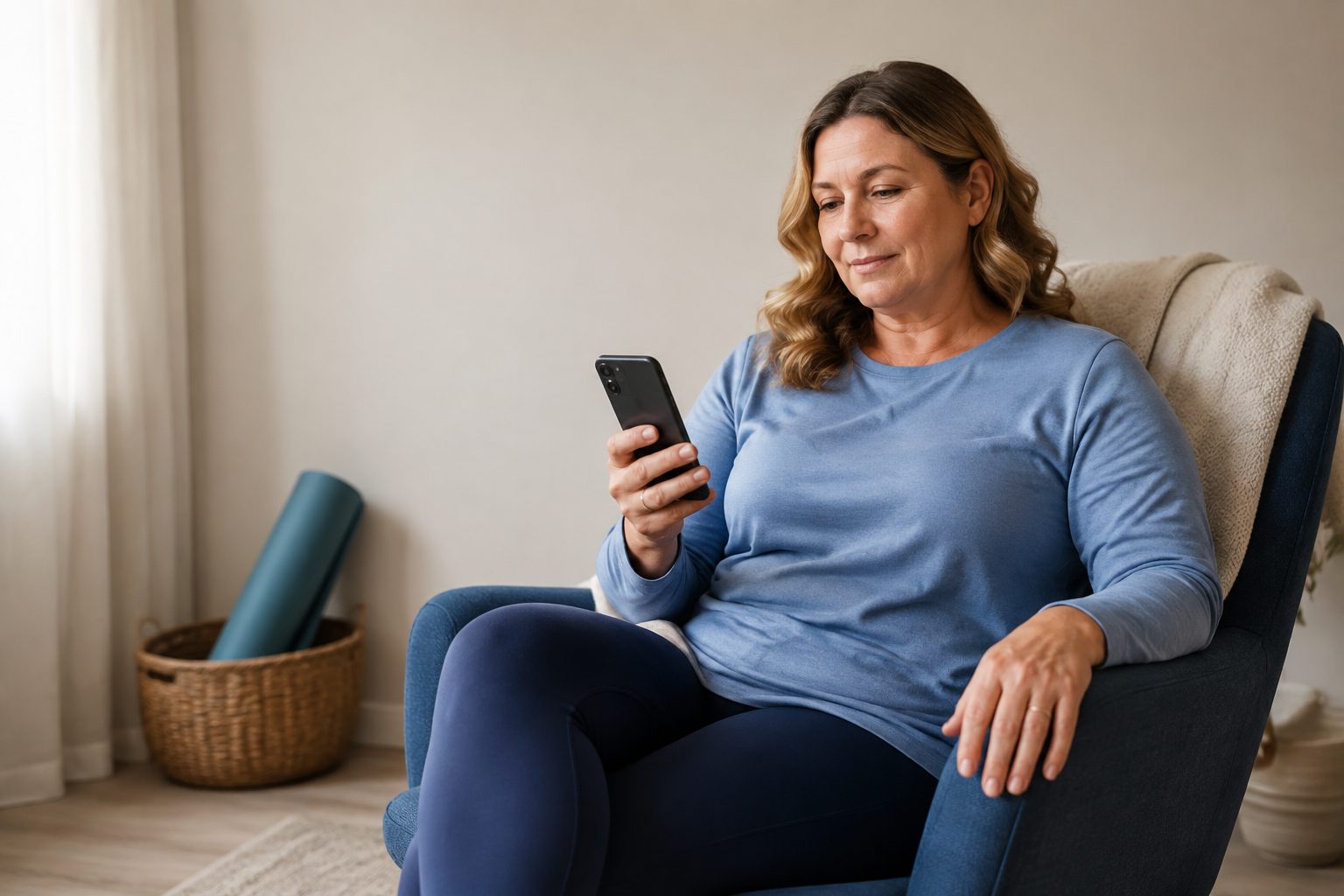
When your shot week leaves you low on energy, a chair can keep the habit going. Here is a 10-minute supported routine and an easier seated version.
Key takeaways
- Chair-supported exercises are low impact and give you something to hold, which can make movement easier on low-energy days.
- This 10-minute routine works the legs, hips, chest and upper back, and can count toward the 2 weekly strength days adults are advised to do when it challenges your muscles.
- On the hardest days, the seated version still keeps the habit going.
- Use a sturdy chair against a wall, move slowly, and stop if something feels wrong.
Some days on a GLP-1 medication, a full workout is not realistic. Maybe it is the day after your shot, appetite is low, or side effects are making the day harder. Those are the days a habit usually breaks. A chair can help you keep it.
Chair-supported exercises give you something to hold for balance and keep the impact low. You can do this routine in about 10 minutes, in normal clothes, in your living room.
This is general education, not medical advice. If you have a heart condition, joint problems, balance issues, are pregnant, or have new or severe symptoms, talk to your healthcare professional before starting.
Why chair exercises count
Adults are advised to do muscle-strengthening activity on at least 2 days a week, alongside 150 minutes of moderate activity (CDC). Strength work does not have to mean heavy weights. Moves like sit-to-stands work your legs and hips when they challenge your muscles, and the same CDC guidance notes that some activity is better than none.
For people on GLP-1 therapy, strength training gets extra attention: a 2025 joint advisory from four obesity and nutrition organizations lists strength training and adequate protein to preserve lean mass among its priorities (The Obesity Society).
Set up
- Use a sturdy chair without wheels, placed against a wall so it cannot slide.
- Stand on a non-slip floor in supportive shoes or bare feet.
- Keep water nearby.
- Move slowly. On a low-energy day, the goal is to move, not to tire yourself out.
The 10-minute chair routine
Warm-up (2 minutes)
- Shoulder rolls: 30 seconds, rolling forward then back.
- Supported march: hold the chair back and march slowly for 60 seconds.
- Standing side reach: 30 seconds, reaching gently over to each side.
Main circuit (6 minutes)
Do each move for about 40 seconds, rest 20 seconds, and go through the list once. If you feel good, repeat it once more.
- Supported sit-to-stand: stand up from the chair and sit down slowly, using your hands for support if needed. A higher seat or a cushion makes it easier.
- Supported calf raises: hold the chair back, rise onto your toes, lower slowly.
- Supported side leg lift: hold the chair, lift one leg out to the side a few inches, lower with control. Switch sides halfway.
- Supported glute kickback: hold the chair, move one straight leg back a few inches, return. Switch sides halfway.
- Wall push-up: hands on the wall at shoulder height, lower your chest toward it, push back.
- Standing row squeeze: arms forward, pull your elbows back and squeeze your shoulder blades together for 3 seconds.
Cool-down (2 minutes)
- Slow breathing with arm floats: breathe in as your arms float up, out as they lower. 60 seconds.
- Gentle torso rotations: 60 seconds, keeping your hips facing forward.
Seated version for the hardest days
If standing feels like too much, stay seated with your feet flat on the floor:
- Seated march: lift your knees one at a time for 60 seconds.
- Seated arm raises: raise both arms forward to shoulder height and lower, 10 times.
- Seated row squeeze: squeeze your shoulder blades together, hold 3 seconds, 10 times.
- Seated leg extension: straighten one knee, hold 2 seconds, lower. 8 times each side.
- Slow breathing: 1 minute.
That is about 5 minutes, and it still counts as showing up.
How to fit it into your week
- Use the chair routine on the day you usually feel lowest after your shot.
- Use a fuller session, like the ones in our 4-week GLP-1 workout plan, on days you feel better.
- If you skipped yesterday, do this today instead of trying to catch up. A missed day is not a debt.
Not sure which days are your low ones? Our article on moving on injection day explains how to spot your pattern, and exercising with GLP-1 side effects covers days shaped by nausea or fatigue.
When to stop
Stop and rest if you feel dizzy, faint, short of breath beyond what is normal for you, or have pain. Talk to your healthcare professional about new, severe or ongoing symptoms.
How Stappn helps
Stappn keeps your injection and side-effect records and plans a short guided session each day around your shot day, your energy and the time you have. On a low-energy day you can tell the coach and get a lighter, supported session like this one instead of skipping. Stappn does not give medical advice or change medication. See how it works.
Frequently asked questions
- Do chair exercises help with weight loss on a GLP-1?
- Chair exercises are a way to stay active and do some strength work on days when more is not realistic. We cannot promise a specific weight result; they are one part of an overall routine you can keep.
- Do chair exercises count as strength training?
- They can, when they challenge your muscles. Moves like sit-to-stands and wall push-ups work major muscle groups. Adults are advised to do muscle-strengthening activity on at least 2 days a week.
- How often can I do this routine?
- You can use it on any low-energy day. For general strength guidance, aim for at least 2 days a week of muscle-strengthening activity across your routine.
- Is it okay to exercise when I feel nauseous?
- Many people find a short, gentle routine easier than a hard workout on those days, and rest is fine too. Tell your healthcare professional about severe or ongoing symptoms.
References
This article is for general educational purposes and is not a substitute for medical advice. Medication, dose, side-effect and treatment decisions should be discussed with a qualified healthcare professional.